
pixel
En Español Em Português
Call The Law Offices of Michael S. Lamonsoff on the phone at 212-962-1020

Available 24/7

Contact

New York City Slip & Fall Accident Lawyers

Slip and fall or trip and fall accidents in New York fall under premises liability law, which holds property owners, landlords, and businesses responsible for maintaining safe conditions on their premises. 

Under New York law, property owners have a duty of care to keep their properties free of hazards, promptly address dangerous conditions, and warn visitors of any potential risks. To succeed in a slip and fall claim, an injured party must prove that the property owner knew or should have known about the hazardous condition and failed to take reasonable steps to fix it. 

Michael S. Lamonsoff, Esq., known among his clients as "The Bull," is one of most tenacious and high-powered slip and fall accident lawyers in New York City. His aggressive, no-nonsense approach has earned him a reputation as a relentless advocate who takes on powerful insurance companies and wins. 

With a proven track record of multi-million dollar settlements and verdicts in New York State, Mr. Lamonsoff has been recognized by his peers and inducted into the Board of Directors of the New York State Trial Lawyers Association. He prepares every case as if it were going to trial, a strategy that strikes fear into insurance companies and maximizes compensation for his clients.

Injury on a worksite

Do not wait. Contact us immediately!

Free Case Consultation

Table of Contents

How Our New York Slip & Fall Accident Lawyers Can Help You

At The Law Offices of Michael S. Lamonsoff, PLLC, our New York slip and fall accident attorneys conduct thorough investigations, gather critical evidence, and consult top experts to build a strong case. We take on negligent property owners, landlords, and insurance companies, ensuring our clients are not pressured into unfair settlements. Every case is prepared for trial, sending a clear message that we are ready to fight for the justice and compensation our clients deserve.

  • Comprehensive Investigation: We gather evidence, obtain surveillance footage, interview witnesses, and work with experts to prove negligence.
  • Aggressive Negotiation: We challenge insurance companies that attempt to minimize or deny claims, securing the highest possible settlements.
  • Trial-Ready Approach: We prepare every case as if it will go to trial, giving us a strategic advantage in settlement negotiations.
  • Personalized Legal Support: We provide compassionate representation and keep clients informed every step of the way.

Schedule A Free Consultation

Contact Us

What are the Common Causes of Slip and Fall Accidents?

Slip and fall accidents often result from hazardous conditions that property owners fail to address. These accidents can happen anywhere and are typically preventable with proper maintenance and safety measures.

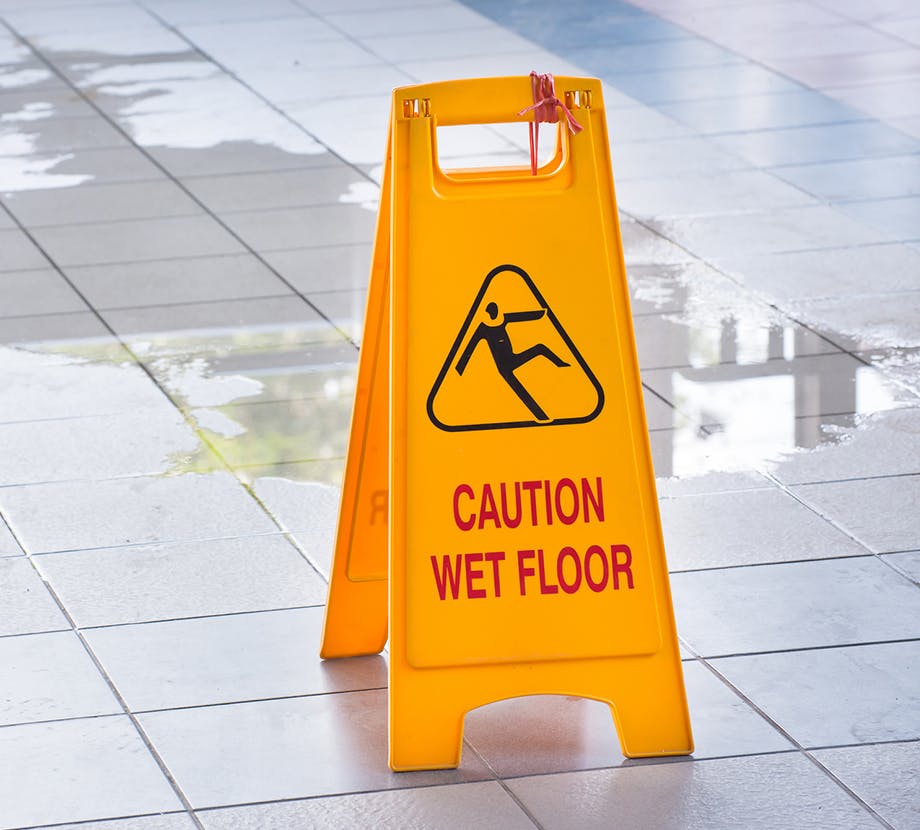
  • Wet or Slippery Floors: Spills, leaks, and recently mopped surfaces without warning signs.
  • Uneven Sidewalks and Walkways: Cracks, potholes, and broken pavement create tripping hazards.
  • Poor Lighting: Dimly lit hallways, staircases, and parking lots reduce visibility and increase fall risks.
  • Loose Carpeting and Floor Mats: Torn rugs, frayed carpets, and unsecured mats can cause people to trip.
  • Broken Staircases and Missing Handrails: Damaged steps and lack of handrails make staircases dangerous.
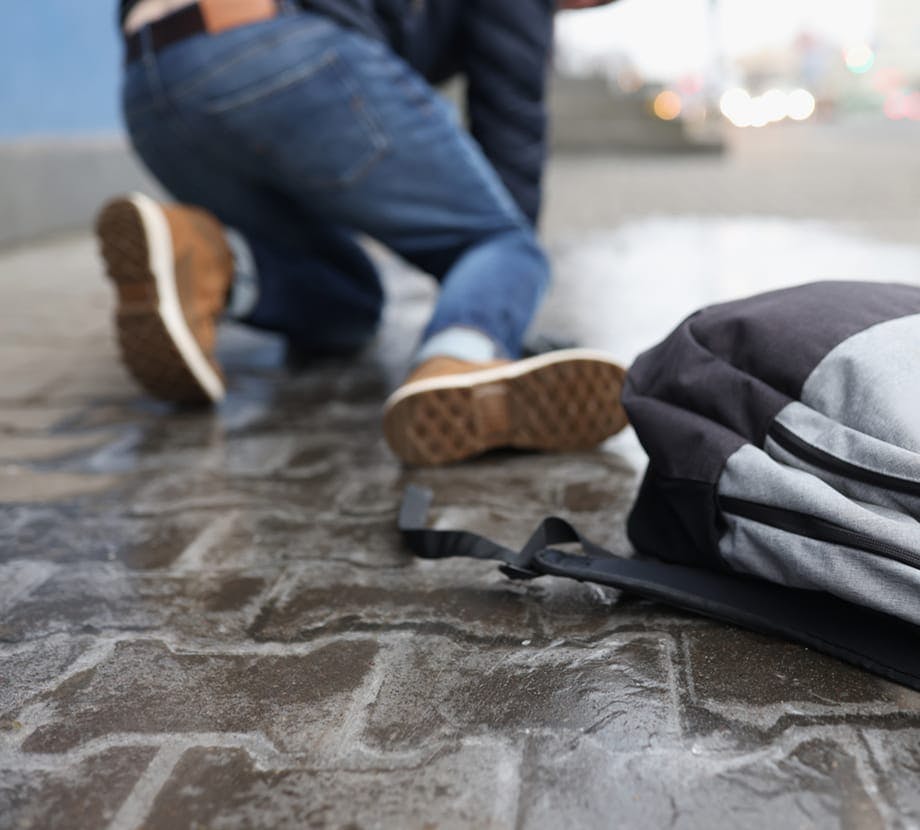
  • Ice and Snow Accumulation: Failure to clear walkways after snowfall leads to slippery conditions.


Slip and Fall Statistics in New York and Nationwide

Slip and fall injuries are not minor and they are not rare. The data tells the story:

  • More than 1 million emergency room visits per year in the United States are caused by slip and fall accidents. (Source: National Floor Safety Institute)
  • 1 in 5 falls results in a serious injury such as a broken bone or traumatic brain injury. (Source: Centers for Disease Control and Prevention)
  • Falls account for more than $30 billion in direct medical costs annually in the U.S. (Source: CDC)
  • In New York City, the average slip and fall settlement ranges from $15,000 to $45,000, with reported averages around $23,000 per case. (Source: NYC Comptroller's Office data, cited in 2023–2025 law firm reports.)

Those averages, however, mask an enormous range. Cases involving severe injuries, such as fractures requiring surgery, traumatic brain injuries, herniated discs, or permanent disability, routinely settle or verdict in the hundreds of thousands or millions of dollars.

Common Injuries from Slip and Fall Accidents

Slip and fall accidents can lead to serious injuries that have long-term consequences. Some injuries may require extensive medical treatment, rehabilitation, or even lifelong care.

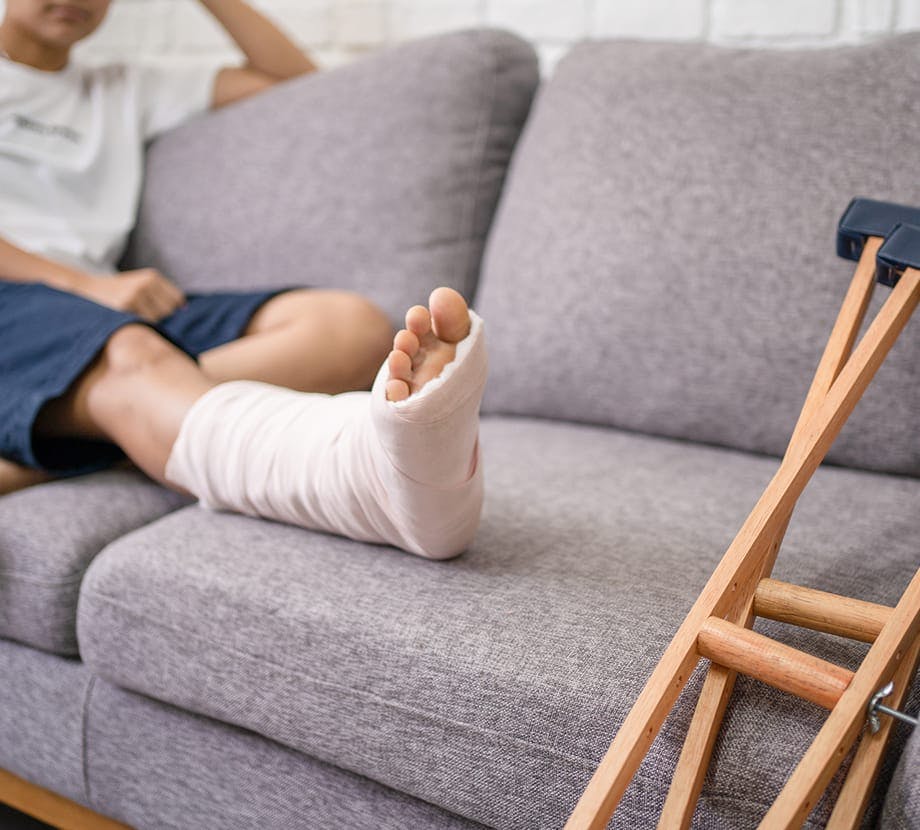
  • Fractures and Broken Bones: Falls frequently result in broken wrists, arms, hips, or ankles.
  • Head Trauma and Concussions: A sudden fall can cause head injuries, including traumatic brain injuries.
  • Spinal Cord Injuries: Damage to the spine can lead to paralysis or long-term mobility issues.
  • Back and Neck Injuries: Slipped discs, herniated discs, and whiplash can cause chronic pain.
  • Torn Ligaments and Sprains: Ankles, knees, and wrists are particularly vulnerable in falls.

Common Locations Where Slip and Falls Occur in New York

Slip and fall accidents can happen anywhere, but they are especially common in high-traffic areas and locations with poor maintenance.

  • Supermarkets and Shopping Malls: Spilled liquids, scattered merchandise, and cluttered aisles create hazards.
  • Apartment and Office Buildings: Poorly maintained staircases, elevators, and lobbies pose risks to tenants and employees.
  • Restaurants and Bars: Spilled drinks, greasy floors, and dim lighting contribute to accidents.
  • Subway Stations and Public Transportation Areas: Slippery platforms, broken escalators, and uneven flooring cause frequent falls.
  • Parking Lots and Sidewalks: Potholes, ice, and uneven pavement can lead to dangerous falls.
  • Hotels and Hospitals: Slippery bathtubs, loose carpeting, and cluttered hallways create hazardous conditions for guests and patients.
  • Construction Sites: Unmarked hazards, debris, and unstable surfaces make these areas particularly dangerous.
Background media

Slip and Fall vs. Trip and Fall: Why the Distinction Matters in New York

Although people use the terms interchangeably, slip and fall and trip and fall describe two mechanically different accidents, and New York courts, insurance adjusters, and defense attorneys treat them differently.

A slip and fall happens when you lose friction with the walking surface. Your foot slides forward (or sideways), your center of gravity shifts, and you typically land on your back, hip, or the back of your head. Common causes include wet floors, freshly mopped tile, leaked liquids, ice, snowmelt tracked into a vestibule, and over-waxed lobby floors.

A trip and fall happens when your foot is suddenly stopped by an obstruction while your body continues forward. You pitch forward and typically land on your knees, hands, wrists, or face. Common causes include raised sidewalk flags, broken curbs, torn carpeting, exposed cables, uneven thresholds, and defective steps.

Inconsistent reporting is one of the top reasons slip and fall claims get denied. If the incident report says "tripped" but the medical records say the client slipped on water, the carrier will use that gap to dispute liability. Getting the mechanism right from the first written statement onward is critical. This is where the experience of our New York slip and fall lawyers at The Law Offices of Michael S. Lamonsoff can help.

Logo media

Why “The Bull” is the Only Choice for Your Slip and Fall Injury Case

Michael S. Lamonsoff, Esq. is a fearless advocate who prepares every case for trial, ensuring that insurance companies know we won’t back down. His aggressive litigation style sets us apart as a top-rated New York slip and fall injury law firm.

  • Litigation Powerhouse – With an aggressive and results-driven litigation style, Michael S. Lamonsoff has built one of the most formidable personal injury law firms in New York.
  • Trial-Ready Approach – Unlike many firms that rush to settle, Mr. Lamonsoff prepares every case for trial, ensuring insurance companies take his clients’ claims seriously.
  • Record-Breaking Settlements and Verdicts – Our relentless advocacy has led to some of the highest settlements and verdicts in New York State, with our nearly a billion dollars recovered for injured victims.
  • Million Dollar Advocates Forum Membership – Due to his record of large financial recoveries, Mr. Lamonsoff is a distinguished member of the exclusive Million Dollar and Multi-Million Dollar Advocates Forum.
  • Unmatched Client Satisfaction – Mr. Lamonsoff is one of the highest-rated attorneys on leading online lawyer review platforms, earning widespread recognition for his dedication to clients.
  • Elite Legal Education – Mr. Lamonsoff earned his law degree from Benjamin N. Cardozo School of Law and holds double post-master’s degrees in psychology from Columbia University.
  • Recognized Among the Best – Our firm is consistently featured in VerdictSearch’s Top New York Verdicts. Our honors include selection as Litigator of the Year by the American Institute of Trial Lawyers, recognition as one of the 10 Best Attorneys in New York City by the American Institute of Personal Injury Attorneys, and induction into 6X Super Lawyers Panel, highlighting our legal excellence and peer recognition.

Member of:

  • Board of Directors of NY State Trial Lawyers Association
  • American Association for Justice
  • NY County Lawyers Association

Educated at:

  • University of Arizona
  • Double post-masters degrees in psychology at Columbia University
  • Benjamin N. Cordozo School of Law

Awards:

  • 6X Super Lawyers Panel
  • Million Dollar and Multi Million Dollar Advocates Forum
Background texture

Nearly a Billion in Verdicts & Settlements for Our Clients

The Law Offices of Michael S. Lamonsoff employs an unrelenting approach to get our clients the justice they deserve. Our slip and fall accident lawyers in NYC have won exceptional awards for our clients who were victims of slip and fall or trip and fall accidents, here are some of the recent examples.

See More Client Results

$5,000,000 Settlement Awarded to a Victim of a Slip & Fall Injury
$4,155,000 Verdict Awarded to a Victim of a Slip & Fall Injury
$4,000,000 Settlement for a Trip & Fall Accident
$2,150,000 Awarded to victim of Slip & Fall Accident
$1,700,000 Awarded to Victim of a Slip & Fall Accident Case
$1,637,500 Verdict in a Slip & Fall Accident
$1,500,000 Settlement in a Slip & Fall Accident
$1,245,000 Settlement in a Slip & Fall Accident
$1,100,000 Settlement for Slip-and-Fall Victim in NYC Subway
$1,000,000 Settlement in a Slp & Fall Accident
$1,000,000 Settlement in a Slip & Fall Accident
$1,000,000 Settlement for Slip-and-Fall Victim
Background texture

What Steps Should You Take After a Slip and Fall Accident in New York?

Taking the right steps after a slip and fall accident is crucial for protecting your legal rights and strengthening your claim.

  • Seek Medical Attention: Your health comes first. Even if injuries seem minor, see a doctor immediately to document your condition.
  • Report the Incident: Notify the property owner, landlord, or store manager and request a written incident report.
  • Document the Scene: Take photos and videos of the hazard, surrounding area, and any visible injuries.
  • Get Witness Information: Collect names and contact details of anyone who saw the fall.
  • Avoid Speaking to Insurance Companies: The property owner’s insurance may try to downplay your claim. Do not provide a recorded statement without legal counsel.
  • Contact a Slip and Fall Attorney: An experienced lawyer can evaluate your case, gather evidence, and negotiate for the maximum compensation you deserve.

Establishing Liability in a Slip and Fall Case in New York

To recover compensation in a slip and fall case, the injured party must prove that the property owner or manager was negligent in maintaining safe premises. Liability is established by demonstrating that the responsible party failed to uphold their legal duty of care, leading to hazardous conditions that caused the accident.

Why Slip and Fall Cases Get Denied, and How We Beat Those Defenses

Insurance carriers and defense firms recycle the same handful of arguments to deny slip and fall claims. Here are the five most common, along with how we counter them here at The Law Offices of Michael S. Lamonsoff.

  • 1. "The condition was open and obvious." The defense argues the hazard was so visible that you should have avoided it. We rebut this with photographs, lighting analysis, and case law confirming that "open and obvious" goes to comparative fault, not to whether the owner had a duty to fix the condition.
  • 2. "You were comparatively negligent." New York is a pure comparative negligence state, so defendants try to shift as much fault to the plaintiff as possible (looking at your phone, wearing the wrong shoes, etc.). We rebuild the timeline, secure witness statements, and use the property owner's own incident reports against them.
  • 3. "We had no notice of the condition." The defense claims they didn't know about the spill, the broken tile, or the icy patch. We obtain cleaning logs, surveillance video, prior complaints, and 311 reports to establish either actual notice or constructive notice (the condition existed long enough that the owner should have discovered it).
  • 4. "The defect was trivial." A favorite defense in sidewalk and stairway cases. We retain engineers to measure the height differential, document the location, and apply the Trincere v. County of Suffolk factors (width, depth, elevation, irregularity, time, place, and circumstances) to defeat the trivial-defect argument.
  • 5. "Your injury was preexisting." The defense subpoenas decades of medical records to argue your injury existed before the fall. We work with treating physicians and independent medical experts to distinguish baseline conditions from aggravation and exacerbation, both of which are fully compensable under New York law.

[Read the full breakdown: Why Slip and Fall Cases Are Hard to Win →]

NYC Admin Code § 7-210: Sidewalk Liability Shifted to Property Owners

If your fall happened on a New York City sidewalk, NYC Administrative Code § 7-210 is almost certainly the controlling statute, and it's the single most important premises liability law in the five boroughs.
Before 2003, the City of New York was responsible for maintaining most sidewalks. Section 7-210 changed that. Since September 14, 2003, the duty to maintain a sidewalk in a "reasonably safe condition" has been shifted to the abutting property owner for:

  • All commercial properties;
  • All residential properties with four or more units.

This duty is non-delegable. A landlord cannot escape liability by claiming the tenant, the managing agent, or the snow-removal contractor was supposed to handle it. If you fell on a defective sidewalk in front of a commercial building or a 4+ unit apartment building, the owner of that building is the proper defendant, not the City.

There is one narrow exception: owner-occupied one-, two-, or three-family residential properties used exclusively for residential purposes are exempt. In those rare cases, the City of New York may still be the responsible party, which triggers a completely different (and far shorter) set of deadlines (see the 90-Day Rule section below).

Identifying the correct defendant under § 7-210 in the first 30 days after a fall is one of the most consequential moves in a sidewalk case. Suing the wrong party can be fatal to the claim. At The Law Offices of Michael S. Lamonsoff, our attorneys are experienced in navigating the complex legal processes to help you with your case.

Learn more about New York premises liability.

Duty of Care Owed by Property Owners

Property owners, landlords, and business operators have a legal duty to keep their premises safe for visitors, tenants, and customers. This includes:

  • Routine Maintenance: Regular inspections and repairs to address hazards such as broken flooring, poor lighting, or wet surfaces.
  • Proper Signage: Posting warnings about temporary dangers like wet floors or ongoing construction.
  • Snow and Ice Removal: Timely clearing of sidewalks, parking lots, and entryways after inclement weather.
  • Safe Stairways and Walkways: Ensuring stairs have secure railings, proper lighting, and no loose carpeting or flooring.

Proving Negligence and Hazardous Conditions

To hold a property owner accountable for a slip and fall case, the injured party must demonstrate that a dangerous condition existed and that the owner either caused it or failed to fix it within a reasonable time. This involves proving:

  • The hazardous condition posed an unreasonable risk to visitors.
  • The property owner or manager was aware (or should have been aware) of the danger.
  • No adequate warnings were provided, and no reasonable steps were taken to fix the hazard.
  • The hazardous condition directly caused the slip and fall injury.
Banner media

MTA and NYC Government Property Slip and Falls (90-Day Rule)

If you fell on a subway platform, a city sidewalk in front of a one-family home, a NYC public school, a NYCHA building, a city bus, a municipal hospital, or any other property owned by the City of New York or the MTA, the standard three-year statute of limitations does NOT apply to you.

When a local government entity is the defendant, General Municipal Law § 50-e controls, and the deadlines are dramatically shorter:

  • 90 days from the date of the accident to file a formal Notice of Claim. Miss this deadline and your case is almost certainly over before it begins.
  • 50-h hearing. After the Notice of Claim is filed, the municipality has the right to take your sworn testimony in a recorded examination called a 50-h hearing. You generally cannot sue until this is completed (or waived).
  • One year and 90 days from the date of the accident to file the lawsuit itself.

(Source: New York General Municipal Law § 50-e.)

These rules apply to falls on MTA subway platforms, in stations, on buses, on Long Island Rail Road and Metro-North property, in NYC public schools, in NYCHA housing, on city-maintained sidewalks (the narrow § 7-210 exception), and on any other government-owned premises. If there is any chance a government entity owns or controls the location where you fell, you need to speak with a lawyer within days, not weeks.

It’s crucial you contact lawyers experienced in such cases, such as those at our firm, The Law Offices of Michael S. Lamonsoff.

Proving Constructive Knowledge

Even if a property owner claims they were unaware of the dangerous condition, they can still be held liable in a slip and fall case under the principle of constructive knowledge. This means:

  • The hazard existed for a long enough period that the owner should have discovered and addressed it.
  • Employees or staff members failed to inspect or maintain the premises properly.
  • A history of similar incidents on the property suggests the owner was aware of recurring dangers.

Constructive knowledge may be proven using photos and videos, surveillance footage, maintenance records, expert analysis, or witness testimony.

Banner media

Evidence Needed to Build a Strong Case

A successful slip and fall claim requires compelling evidence to establish negligence and liability. Key evidence includes:

  • Photos and Videos: Capturing the hazardous condition immediately after the accident.
  • Incident Reports: Documentation filed with the property owner, manager, or business.
  • Witness Testimony: Statements from people who saw the fall or were aware of the hazard.
  • Medical Records: Proof of injuries and their connection to the accident.
  • Surveillance Footage: Security camera recordings that show how the fall occurred.
  • Maintenance Logs: Records showing whether the property was inspected or repaired.
  • Accident Reconstruction: Expert opinions on how the slip and fall accident occurred.

Comparative Negligence and How It Affects Claims in NY

New York follows a pure comparative negligence rule, meaning an injured party can recover damages even if they were partially at fault for their accident. However, the compensation is reduced based on their percentage of fault. For example:

    • If a court finds that the injured party was 20% at fault (e.g., distracted while walking), their compensation will be reduced by 20%.
    • If they were 50% at fault, they can still recover half of their damages.
    • Even if they were 99% at fault, they may still receive 1% of the awarded damages.

    Because property owners and insurance companies may try to shift blame onto the injured party, having an aggressive attorney on your side is pivotal to maximizing compensation.

    Your Next Chance At Life

    My husband is a construction worker and was injured while on the job. We were referred to Michael and retaining him was a wonderful decision. Michael advised us not to accept several inadequate offers that were presented to us. He knew what my husband’s case was worth, and he didn’t want him to settle for any less than his injury deserved.

    Jennifer Rainone

    I was exceptionally satisfied with the services I received from the offices of Michael S. Lamonsoff. The lawyers and paralegals on the case were very thorough, communicative, and knowledgeable. It was a long process for me to get my case settled, but they were with me and supportive every step of the way. I couldn’t have asked for a better team!

    Milina Petrovskaya

    I'm a construction worker. I got injured at a construction site. Michael is an amazing attorney. I'm lucky to have found Michael Lamonsoff's firm. I'm so happy because they did a really great job. He keeps you informed of the status of your case all the time. Michael told me to wait until trial. I never thought I'd get the amount that Michael got for me. I'm absolutely happy with the results of my case. I've already recommended two other construction workers who are also happy with Michael.

    Michael Angel Orellana

    I'm a construction worker who was involved in an accident. I suffered back, neck, and shoulder injuries. My wife is the one who told me about Michael because she used to work with him before. Michael really was amazing. It was awesome working with them. I had no issues. Everything went smoothly. He's one of the best lawyers I ever had.

    Vito Joseph

    Average Slip and Fall Settlement Amounts in New York

    Settlement value depends almost entirely on injury severity, liability strength, and whether the case is litigated. Based on New York case data, settlements generally fall into three tiers:

    • Minor injuries, $10,000 to $20,000. Soft-tissue injuries, sprains, contusions, and short-course physical therapy with no surgery and no permanent impairment.
    • Moderate injuries, $30,000 to $75,000. Fractures that heal without surgery, longer rehabilitation, lost time from work, and some lasting limitation.
    • Severe injuries, $100,000 and up, often well into the seven figures. Surgical fractures, spinal injuries, traumatic brain injury, hip replacements, and permanent disability or disfigurement.

    The high end of that range is not theoretical. The Law Offices of Michael S. Lamonsoff’s verdict and settlement record on premises liability and slip-and-fall cases includes results in the multi-million dollar range, including a $5,000,000 recovery and a $4,155,000 recovery for severely injured clients. 

    See our results >>

    How Much Does a NYC Slip and Fall Lawyer Cost?

    For nearly every slip and fall client, the answer is: nothing upfront, and nothing at all unless we win.
    New York personal injury attorneys work on a contingency fee basis. That means:

    • No retainer.
    • No hourly billing.
    • No fee unless we recover money for you.

    Under New York law, attorney fees on slip and fall personal injury cases are capped:

    • Up to 33 1/3% (one-third) of the recovery if the case settles before a lawsuit is filed.
    • Up to 40% of the recovery once litigation has begun.

    (Source: New York Judiciary Law and NYC Bar Association contingency fee guidance.)

    What costs are deducted from my settlement?

    In addition to the contingency fee, the firm advances the case costs, and those costs are reimbursed out of the settlement at the end of the case. Typical costs include:

    • Court fees
    • Process server fees
    • Medical record retrieval fees
    • Expert witness fees (medical experts, accident reconstructionists, engineers)
    • Deposition transcripts
    • Investigation costs (photographs, witness statements, scene inspections)
    • Trial exhibits and demonstratives

    At The Law Offices of Michael S. Lamonsoff, if we do not recover money for you, you owe nothing: not the fee, and not the costs. That risk sits entirely on the firm.

    Banner media

    Frequently Asked Questions:New York Slip and Fall Accidents

    What is the statute of limitations for a slip and fall case in New York?

    Victims have three years from the date of the accident to file a personal injury lawsuit. If the slip and fall occurred on government property, in most claims, a notice of claim must be filed within 90 days, and the lawsuits must be filed within one year and 90 days.

    Can I still file a claim if I was partially at fault for my fall?

    Yes. Under New York’s pure comparative negligence law, you can recover damages even if you were partially responsible. Based on this, your compensation will be reduced by your percentage of fault.

    What if the property owner argues they were unaware of the hazard?

    You can still prove liability by demonstrating constructive knowledge—showing that the hazard existed long enough that the owner should have known about it and taken action to fix it. Evidence such as surveillance footage, maintenance records, and witness statements can help establish this.

    Related Articles About Slip & Fall Cases

    Should I Get A Slip And Fall Lawyer?

    Find out more about when you should consider getting a slip and fall lawyer.

    Learn More About When To Get A Slip And Fall Lawyer

    Are Slip and Fall Cases Hard to Win?

    Slip and fall cases are notoriously complex, and winning them requires a strategic legal approach.

    Learn More About Winning Slip & Fall Cases

    Can I Sue My Employer If I Slip And Fall?

    If you have been injured in a slip and fall accident at work, you might be wondering whether you can sue your employer for damages.

    Learn More About Suing Your Employer For A Slip & Fall

    Do Slip and Fall Cases Go To Trial?

    Slip and fall cases in New York are addressed under premises liability, a legal concept that holds property owners responsible for maintaining safe conditions for visitors.

    Learn More About What To Expect

    Your Legal Rights After An Injury

    As an injured victim, you need to be aware of your legal rights, so that you can take the right steps in the event of an injury and get the medical care and compensation you deserve.

    Learn More About Your Legal Rights After An Injury

    How Long Will It Take You To Get Your Injury Settlement?

    If you have been injured due to a third party’s negligence and are planning to pursue a personal injury claim, you might be wondering how long it might take to get your settlement.

    Learn More About What To Expect

    Contact Us for a Free Consultation

    If you’ve been injured in a slip and fall accident, you may be entitled to financial compensation. Reach out to The Law Offices of Michael S. Lamonsoff, PLLC today to learn your legal options. 

    To schedule your free consultation, call us at 212-962-1020 or fill out this online contact form.

    Accessibility: If you are vision-impaired or have some other impairment covered by the Americans with Disabilities Act or a similar law, and you wish to discuss potential accommodations related to using this website, please contact our Accessibility Manager at 212-962-1020.
    Free Consultation