

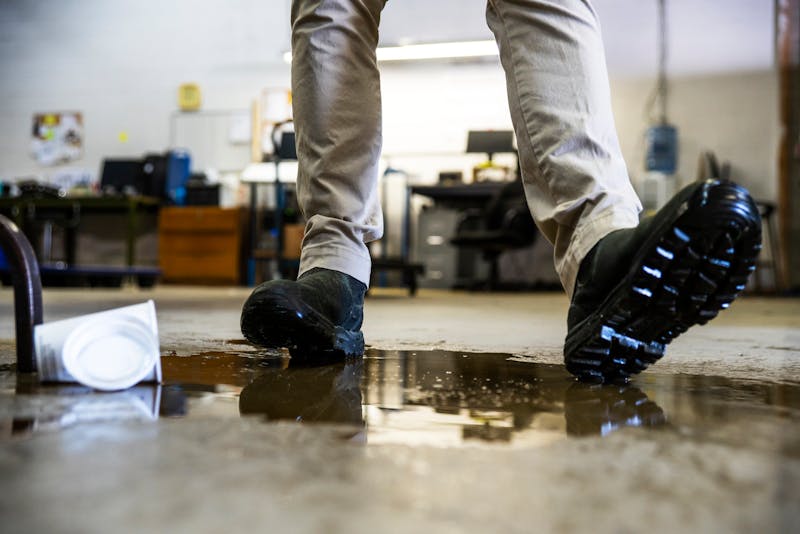
Slip and fall accidents happen every day in New York City on icy sidewalks, in grocery stores, inside apartment buildings, and on poorly maintained staircases. While these incidents may sound minor, the injuries are often severe. Broken hips, spinal injuries, traumatic brain injuries, and torn ligaments are common outcomes.
One of the most frequent questions injury victims ask is: Are slip and fall cases hard to win?
The short answer is: They can be challenging, but with the right evidence and the right legal team, they are absolutely winnable. At The Law Offices of Michael S. Lamonsoff, Michael “The Bull” Lamonsoff has recovered substantial settlements and verdicts for slip and fall victims across New York City. Here’s what makes these cases complex and how to strengthen your claim.
Why Slip and Fall Cases Can Be Difficult
Slip and fall cases are typically filed under premises liability law. To win, you must prove that the property owner was negligent. That means showing:
- A dangerous condition existed.
- The property owner knew or should have known about it.
- The owner failed to fix or warn about the hazard.
- That failure caused your injury.
The biggest hurdle in most slip and fall cases is proving notice that the owner had actual or constructive knowledge of the hazard.
What Is “Notice” in a Slip and Fall Case?
Notice refers to whether the property owner knew, or reasonably should have known, about the dangerous condition.
There are two types:
Actual Notice
The owner was directly aware of the hazard. For example, an employee saw a spill but did nothing to clean it up.
Constructive Notice
The hazard existed long enough that a reasonable property owner should have discovered and fixed it.
Insurance companies frequently argue that:
- The spill just occurred moments before the fall.
- They had no reasonable opportunity to correct it.
- The condition was "open and obvious."
These defenses are common, and they make slip and fall cases appear harder than they actually are.
Common Types of Slip and Fall Hazards in NYC
Slip and fall accidents in New York City often involve:
- Wet supermarket floors
- Icy sidewalks
- Broken stairs or loose handrails
- Poor lighting in hallways
- Torn carpeting
- Uneven pavement
- Construction debris
Under New York law, property owners have a duty to maintain reasonably safe conditions. In winter weather, for example, owners must remove snow and ice within a reasonable time after a storm ends.
Evidence Is Everything in Slip and Fall Cases
Slip and fall cases are not hard to win when strong evidence exists. The sooner evidence is preserved, the stronger the case becomes.
Critical evidence may include:
- Surveillance video footage
- Incident reports
- Maintenance logs
- Cleaning schedules
- Photographs of the hazard
- Witness statements
- Weather reports (in ice cases)
Property owners often control key evidence, such as surveillance footage. Acting quickly allows your attorney to send a preservation letter to prevent destruction of that evidence.
Comparative Negligence in New York
Another reason people believe slip and fall cases are hard to win is New York’s comparative negligence rule.
Under comparative negligence, if you are partially at fault, for example, texting while walking, your compensation may be reduced by your percentage of fault.
However, even if you are partially responsible, you can still recover damages. Insurance companies often exaggerate a victim’s fault to reduce payouts. A skilled attorney pushes back against these tactics.
How Severe Injuries Strengthen a Slip and Fall Case
Slip and fall cases are taken more seriously when the injuries are significant. Common serious injuries include:
- Hip fractures
- Wrist fractures
- Torn ACL or meniscus injuries
- Concussions and traumatic brain injuries
- Herniated discs
The more substantial the medical documentation, the more difficult it is for insurers to minimize the claim.
Are Slip and Fall Cases Against the City Harder to Win?
Cases involving the City of New York or public entities can be more complex because of special rules.
For example:
- You may need to file a Notice of Claim within 90 days.
- The city may argue it lacked prior written notice of the defect.
These technical defenses can make cases against municipal entities more challenging, but not impossible.
What Makes a Slip and Fall Case Strong?
A strong slip and fall case usually includes:
- Clear photographic evidence of the hazard
- Proof the hazard existed for a measurable time
- Witness confirmation
- Consistent medical treatment
- No major gaps in care
The earlier an attorney becomes involved, the stronger these elements can be preserved.
Why Hiring the Right Lawyer Changes Everything
Slip and fall cases are only “hard to win” when they are poorly investigated or underprepared.
Michael “The Bull” Lamonsoff prepares every case as if it is going to trial. That aggressive preparation changes how insurance companies respond. When insurers know a case may go before a jury, settlement values increase.
With over $500 million recovered and more than 150 years of combined litigation experience, The Law Offices of Michael S. Lamonsoff has the resources to:
- Hire expert witnesses
- Reconstruct accident scenes
- Challenge defense arguments
- Push cases to verdict when necessary
We speak English, Spanish, and Portuguese, and we fight relentlessly for injury victims throughout New York City.
The Bottom Line: Are Slip and Fall Cases Hard to Win?
Slip and fall cases are not inherently hard to win, but they require strong evidence, strategic litigation, and experienced legal representation.
Insurance companies count on victims assuming their case is too difficult to pursue. That assumption protects negligent property owners. When you work with a proven trial attorney, the balance of power shifts.
Call The Law Offices of Michael S. Lamonsoff Today
If you were injured in a slip and fall accident in New York City, do not assume your case is unwinnable. Let us evaluate your claim and explain your options.
Call The Law Offices of Michael S. Lamonsoff for a free consultation. You’re not just hiring a lawyer. You’re putting your case in the hands of a fighter. You’re hiring The Bull.