

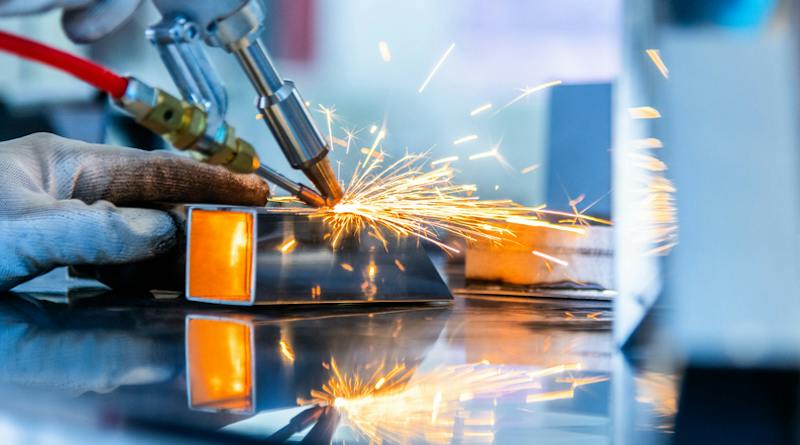
After a serious welding accident in New York City, an employer, contractor, property owner, or insurance company may quickly begin building a defense. They may argue that the welder failed to wear proper personal protective equipment (PPE), ignored a safety briefing, used equipment incorrectly, or caused the accident through their own actions. In other cases, an insurer may argue that workers' compensation is the injured worker's only remedy.
These arguments should not automatically be accepted as the final word on what happened.
Welding accidents can involve fires, explosions, electrical hazards, toxic fumes, falls, defective equipment, and inadequate safety precautions. Determining who was responsible requires investigating the conditions at the worksite, the safety measures that were provided, the training workers received, and the actions of every company involved.
At The Law Offices of Michael S. Lamonsoff, we investigate serious workplace accidents to determine what happened before defendants and insurance companies can shift responsibility onto an injured worker.
Comparative Negligence: A Common Defense in Welding Accident Cases
One of the most important defenses in a welding accident lawsuit is comparative negligence. Under New York CPLR 1411, a claimant's own culpable conduct generally does not prevent recovery in a personal injury action. Instead, the damages otherwise recoverable can be reduced according to the claimant's proportionate share of responsibility. That means being partially responsible for an accident does not necessarily mean receiving nothing.
For example, if a worker suffered $1 million in damages and was determined to be 20 percent responsible under ordinary comparative negligence principles, the recoverable damages could potentially be reduced by 20 percent. This is why insurers have a financial incentive to place as much blame as possible on the injured worker.
In welding accident cases, defendants may argue that the worker:
- Failed to use required PPE
- Used welding equipment improperly
- Ignored a known hazard
- Disregarded instructions
- Entered a restricted area
- Failed to follow a safety procedure
But an allegation of worker negligence is not proof. The circumstances leading to the accident still need to be investigated.
"The Worker Didn't Follow Safety Procedures": How Insurers Use PPE and Training Records Against You
After a welding accident, an insurance company may search training records, safety documents, toolbox talks, and PPE policies for evidence it can use to blame the worker. For example, the defense might argue that the injured welder had attended a safety meeting addressing the exact hazard that later caused the accident. It might claim that PPE was available but the worker voluntarily chose not to use it. That is only one side of the investigation.
The worker's attorney should also examine whether appropriate PPE was actually provided, whether it was suitable for the hazard, whether workers received adequate training, whether safety procedures were enforced, and whether supervisors knowingly allowed unsafe practices.
Federal construction safety regulations place important responsibilities on employers. Under OSHA regulation 29 CFR 1926.21, employers must instruct workers in recognizing and avoiding unsafe conditions and in the regulations applicable to their work environment.
A signature on a training sheet therefore does not necessarily prove that an employer fulfilled every safety responsibility or that the worker caused the accident.
The investigation may examine:
- PPE distribution records
- Safety meeting and toolbox-talk records
- Employee training materials
- Welding equipment inspection records
- Job hazard analyses
- Witness statements
- Photographs and surveillance footage
- Supervisor communications
- Prior safety complaints
- OSHA records
These records can provide a much more complete picture of what was actually happening at the worksite before the injury occurred.
What If the Employer Says You Were Properly Trained?
An employer may point to training documents and argue that an accident must have been the worker's fault because the worker received safety instruction. That conclusion does not necessarily follow.
Training has to address the hazards workers actually encounter. OSHA requires employers in construction to instruct employees about recognizing and avoiding unsafe conditions applicable to their work. A welding accident investigation may therefore consider whether the training was meaningful and appropriate for the work being performed.
For example, did the worker understand the instructions? Did the training address the particular welding process and hazards involved? Were workers given appropriate protective equipment? Did supervisors enforce the procedures discussed during training?
OSHA has previously explained that required construction safety instruction must effectively convey the necessary information and account for factors such as the hazards workers will encounter. The existence of a signed training document is evidence. It is not necessarily the end of the inquiry.
Is Workers' Compensation Enough After a Welding Accident?
Workers' compensation can provide important benefits to an injured welder, including medical treatment and a portion of lost wages. But workers' compensation may not always represent the full extent of an injured worker's legal rights.
Depending on how the accident occurred, there may also be a claim against a third party other than the worker's employer. Potential defendants can include:
- Property owners
- General contractors
- Subcontractors
- Equipment manufacturers
- Equipment rental companies
- Other companies working at the site
Third-party personal injury claims can potentially provide compensation for losses that workers' compensation does not ordinarily cover, including pain and suffering.
Certain construction accidents may also implicate provisions of New York's Labor Law. The applicable law depends heavily on how the welding accident occurred and the worker's specific activity at the time.
For that reason, an injured welder should not assume that receiving workers' compensation means there is no other potential claim.
Is It Still Worth Pursuing a Claim If You Were Partially at Fault?
Potentially, yes.
Under New York's comparative negligence framework, an injured person's own negligence generally reduces recoverable damages according to their share of responsibility rather than automatically eliminating the claim.
Suppose an insurer argues that a welder should have recognized a dangerous condition but evidence also establishes that a contractor failed to provide adequate protection against that hazard. Responsibility may become a contested issue rather than an all-or-nothing question. The financial difference can be significant when an accident causes catastrophic injuries.
A severe welding accident can result in:
- Serious burns
- Eye injuries or vision loss
- Electrical injuries
- Respiratory damage
- Traumatic brain injuries
- Spinal injuries
- Permanent scarring
- Amputation
- Long-term disability
When an injury prevents someone from returning to construction work, the claim may involve years of future lost earnings, medical treatment, rehabilitation, and pain and suffering. Accepting an insurer's version of fault without investigating it can mean leaving substantial compensation unclaimed.
"It Was an Unavoidable Accident": Another Defense to Examine Carefully
Defendants sometimes characterize workplace accidents as unforeseeable events that nobody could reasonably have prevented. A welding accident may look sudden, but the conditions that caused it may have developed over time.
An explosion, for example, may involve improper storage of combustible materials. An electrical injury may raise questions about defective equipment, grounding, maintenance, or worksite conditions. Exposure to fumes may involve ventilation and respiratory protection.
A proper investigation asks what happened before the accident, not simply what happened during the final seconds. That may require testimony from witnesses, review of worksite records, inspection of equipment, and analysis by qualified experts.
How an Attorney Can Challenge Common Welding Accident Defenses
The sooner an investigation begins, the greater the opportunity to preserve evidence. An experienced construction accident attorney may obtain records that an injured worker would have difficulty accessing independently, including internal safety documents, contracts, equipment records, training materials, and communications between contractors.
The attorney can also investigate whether defendants are attempting to selectively use safety records against the worker.
For example, if an insurer relies on a safety policy requiring specific PPE, additional questions should follow. Was that PPE actually supplied? Was it readily available? Was it appropriate for the welding task? Did supervisors enforce the policy? Were workers pressured to complete tasks in ways that conflicted with written procedures?
The answers can significantly change how responsibility for the accident is evaluated.
How Long Will a Contested Welding Accident Claim Take?
There is no single timeline for a welding accident lawsuit in New York. Cases involving disputed liability can take longer because both sides may need to conduct extensive discovery before meaningful settlement negotiations occur.
The timeline can depend on:
- The seriousness of the injuries
- The length of medical treatment
- The number of defendants
- Whether responsibility is disputed
- How much documentary evidence must be obtained
- Whether expert witnesses are required
- Depositions
- Court scheduling
- Whether the case goes to trial
A case involving permanent burns, lung damage, neurological injuries, or another catastrophic condition may also require time for doctors and experts to understand the victim's long-term prognosis.
That can be frustrating for someone who needs compensation now. But resolving a serious injury case before the long-term consequences are understood can create another problem: the settlement may fail to account for years of future medical expenses or lost earning capacity.
Is a Welding Accident Lawsuit Worth the Wait?
For someone facing a life-changing injury, the more useful question is whether the claim is being handled in a way that protects their long-term interests. An insurer may prefer an early settlement that closes the claim quickly. An injured worker needs to consider what happens years later.
Will another surgery be necessary? Can the worker return to welding or construction? Will earning capacity be permanently reduced? Will burn scars or neurological damage affect daily life? Will ongoing medical treatment be required?
These questions can substantially affect the value of a serious welding injury claim. A lawyer should pursue the case efficiently, but speed should not come at the expense of understanding the full extent of the damages.
Frequently Asked Questions About Contested Welding Accident Claims
Can I sue if I was not wearing the right PPE?
Potentially. The effect of PPE use depends on the facts and applicable law. The investigation should consider why the equipment was not being used, whether appropriate PPE was provided, what training occurred, and whether other parties contributed to the accident.
Can my employer blame me for my welding accident?
An employer or insurer may allege that your conduct contributed to the accident. That allegation does not automatically determine liability. Evidence concerning training, supervision, equipment, worksite conditions, and the actions of other parties may all be relevant.
Can I receive workers' compensation and file a lawsuit?
Depending on the circumstances, an injured worker may receive workers' compensation while also pursuing a personal injury claim against a legally responsible third party. Workers generally cannot sue their employer for ordinary negligence when workers' compensation applies, but claims against owners, contractors, manufacturers, and other third parties may be available.
What if I signed a safety training form?
Signing a form does not necessarily establish that an employer provided adequate training or that you were responsible for the accident. The content and effectiveness of the training, the hazards involved, and actual worksite practices should be examined.
How long does a welding accident lawsuit take?
There is no universal timeline. Serious cases involving multiple defendants, extensive discovery, expert analysis, and disputed liability generally take longer than straightforward claims that settle early.
When They Point the Finger at You, Put a Fighter in Your Corner
Employers, contractors, and insurance companies may have teams working to limit their liability after a serious welding accident. They may examine your actions, your training history, and even the PPE you were wearing in an effort to reduce what they have to pay. You deserve someone investigating their conduct just as aggressively.
The Law Offices of Michael S. Lamonsoff has more than 150 years of combined litigation experience and has recovered more than $500 million in settlements and verdicts for injured clients. Michael S. Lamonsoff, known as "The Bull," has built his reputation fighting insurance companies and powerful defendants on behalf of injured New Yorkers.
Our attorneys prepare serious construction accident cases for litigation from the beginning. When defendants attempt to blame an injured worker, we investigate the evidence and fight back.
If you or a loved one suffered a serious welding injury in New York City, contact The Law Offices of Michael S. Lamonsoff for a free consultation. You're in the hands of a fighter.