

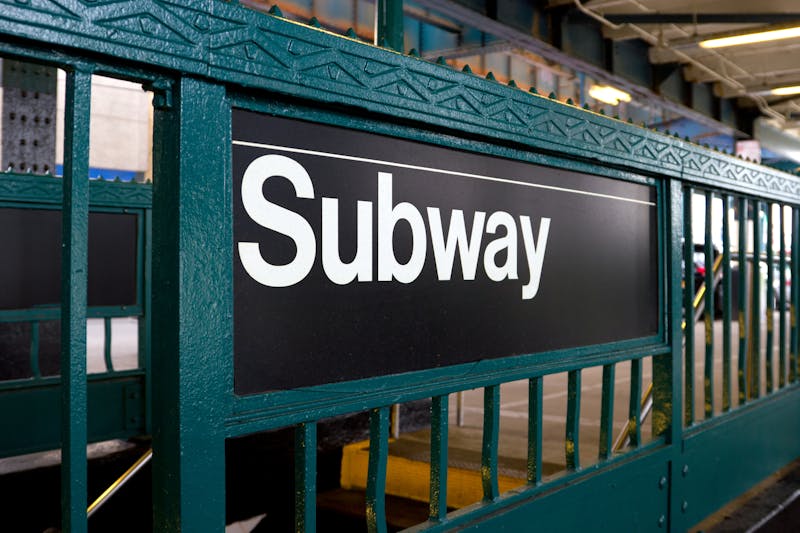
Subway accidents in New York City can leave passengers facing painful injuries, unexpected medical bills, and serious financial stress. Whether your injury happened due to a sudden train stop, a platform fall, a door malfunction, or a derailment, knowing how to file an insurance claim after a subway injury is critical to protecting your rights.
Filing a claim against a public transit authority like the MTA is not the same as filing a typical insurance claim after a car accident. Special rules apply, strict deadlines exist, and government entities have powerful legal teams defending them. At The Law Offices of Michael S. Lamonsoff, Michael “The Bull” Lamonsoff and his team fight aggressively for injured New Yorkers and ensure no deadline is missed.
If you were hurt on the subway in New York City, here is what you need to know.
Step 1: Seek Immediate Medical Attention
The first step in filing an insurance claim after a subway injury is protecting your health. Even if your injuries seem minor, seek medical attention right away.
Prompt treatment:
- Creates official medical documentation
- Connects your injuries directly to the subway incident
- Prevents insurance companies from arguing your injuries were unrelated
Delaying medical care can seriously weaken your claim.
Step 2: Report the Subway Injury Immediately
You should report the incident before leaving the station whenever possible. Notify:
- An MTA employee
- Station personnel
- A conductor or train operator
Ensure that an official incident report is created. Ask how you can obtain a copy. This report becomes key evidence in your insurance claim.
Step 3: Document the Scene
If you are physically able, gather evidence before leaving the area. Important documentation may include:
- Photos of the hazardous condition (wet floor, broken stair, malfunctioning door)
- Photos of your visible injuries
- Names and contact information of witnesses
- Train car number and station location
Surveillance footage may exist, but transit authorities control that footage. Acting quickly allows your attorney to demand preservation of evidence.
Step 4: Understand the Notice of Claim Requirement
This is the most critical part of filing an insurance claim after a subway injury in New York City.
If your injury involves a public entity like the New York City Transit Authority (NYCTA) or Metropolitan Transportation Authority (MTA), you must file a Notice of Claim within 90 days of the incident.
The Notice of Claim must include:
- Your name and contact information
- The date, time, and location of the incident
- A description of how the injury occurred
- The damages you are claiming
If you miss the 90-day deadline, you may permanently lose your right to compensation.
After filing the Notice of Claim, you may be required to appear for a statutory hearing (often called a 50-h hearing) before a lawsuit can proceed. Learn more about how the MTA claim process works and what to expect at each stage.
Step 5: Identify the Correct Insurance Coverage
Many subway injury victims assume there is a simple insurance policy that pays automatically. In reality, subway claims often involve:
- Government liability insurance
- Self-insured transit authorities
- Third-party contractor insurance
- Manufacturer liability policies (if equipment failed)
Determining which insurance policy applies requires investigation. In some cases, multiple parties may share responsibility.
For example:
- A maintenance contractor may be liable for a defective escalator due to negligent maintenance .
- A cleaning company may be responsible for a slippery platform .
- A train manufacturer may be liable for mechanical failure.
An experienced subway accident attorney will identify all potential defendants.
Step 6: Prove Negligence
To succeed in an insurance claim after a subway injury, you must prove negligence. This means showing:
- The transit authority owed you a duty of care.
- The transit authority breached that duty.
- The breach caused your injury.
- You suffered measurable damages.
Evidence may include:
- Maintenance and inspection records
- Surveillance footage
- Witness testimony
- Engineering reports
- Prior complaints about the same hazard
Transit authorities often argue that they did not have notice of the dangerous condition. Your legal team must show that the hazard existed long enough that it should have been corrected.
Step 7: Avoid Speaking to Insurance Adjusters Alone
After an incident, you may be contacted by investigators or insurance representatives. Their goal is to minimize payouts.
They may:
- Ask for recorded statements
- Suggest your injuries are minor
- Offer a quick, low settlement
Do not provide recorded statements without legal counsel. What you say can be used against you later.
What Compensation Can You Recover After a Subway Injury?
If your claim is successful, you may be entitled to compensation for:
- Emergency room visits and hospitalization
- Surgery and rehabilitation
- Lost wages
- Reduced future earning capacity
- Pain and suffering
- Emotional distress
Serious subway injuries, such as traumatic brain injuries, spinal cord injuries, or fractures , can result in substantial settlements or verdicts when properly pursued.
How Long Do You Have to File a Lawsuit?
In addition to the 90-day Notice of Claim requirement, lawsuits against public entities in New York typically must be filed within one year and 90 days from the date of the incident.
These deadlines are strict. Courts rarely grant exceptions.
Why Hiring Michael “The Bull” Lamonsoff Matters
Filing an insurance claim after a subway injury in New York City is not a simple administrative process. You are going up against one of the largest public transportation systems in the country.
Michael S. Lamonsoff has recovered nearly a billion dollars for injured victims and brings more than 150 years of combined litigation experience to every case. Known as “The Bull,” he prepares every case for trial from day one.
Transit authorities and insurers know that when The Bull is involved, lowball settlements will not be accepted. We speak English, Spanish, and Portuguese, and we fight aggressively for every client.
Call The Law Offices of Michael S. Lamonsoff Today
If you were injured on a subway or railway in New York City, do not delay. The 90-day clock may already be ticking.
Call The Law Offices of Michael S. Lamonsoff to schedule a free consultation. You’re not just hiring a lawyer—you’re putting your case in the hands of a fighter. You’re hiring The Bull.